Dr. Karla Krewulak has spent much of her career working in evidence synthesis, supporting research that helps improve care for critically ill patients and their families. As a Senior Research Associate in the Department of Critical Care Medicine at the University of Calgary, her work spans systematic reviews, scoping reviews, qualitative research, and mixed-methods studies, often involving complex datasets and multidisciplinary teams.
In that kind of environment, having a reliable and efficient workflow matters – especially during data extraction, where consistency and standardisation can significantly affect the quality of the final output.
At a glance
Institution: University of Calgary
Uses Covidence for:
• Screening
• Duplicate removal
• Data extraction
• Collaborative reviews
Key benefit: Cleaner, more structured data with fewer inconsistencies.
Building a workflow around spreadsheets
For years, Karla’s team relied on spreadsheets. Like many experienced review teams, they had built detailed documents with dropdowns and data guides to help standardise extraction and keep collaborators aligned throughout the process.
“Prior to using Covidence, we would use spreadsheets. We would use a lot of drop-down menus where possible and always have some sort of data guide that would accompany it as well, so people knew what types of data we were expecting.”
This approach worked well enough, but it also introduced complexity. When multiple reviewers were working across spreadsheets, PDFs, and separate files, even small inconsistencies could create unnecessary friction and lead to additional cleanup later.
“In spreadsheets, if somebody adds an extra space, or if they put something capitalised, it might not be counted as the same thing.”
Giving Covidence another chance
Karla had explored Covidence in the past, but at the time, it didn’t feel like a better alternative to the workflow her team already had in place.
“In earlier versions it wasn’t great, and I found it felt like more work to set it up than what we had in a spreadsheet.”
Rather than switching tools prematurely, she stayed with the system she knew. But when she revisited Covidence later, she found that the experience had changed considerably.
“I find it’s a lot better than it used to be. I’ve actually got a lot of people recruited on using it now who had the same earlier experience as me.”
A better workflow, all in one place
One of the biggest improvements was the data extraction workflow itself. Instead of constantly moving between spreadsheets and PDFs, Karla’s team could review full-text articles and extract data within a single workspace.
“One thing I’ve always found really useful that Covidence did well is displaying the paper so that you could work on one screen. Not all of us have dual screens, and having it split and having it pull up the paper makes a big difference.”
This seemingly simple workflow improvement had a meaningful impact on how efficiently her team could work.
“I really like how it opens up on the left-hand side of the screen and the right-hand side of the screen. It just works really well for the data flow.”
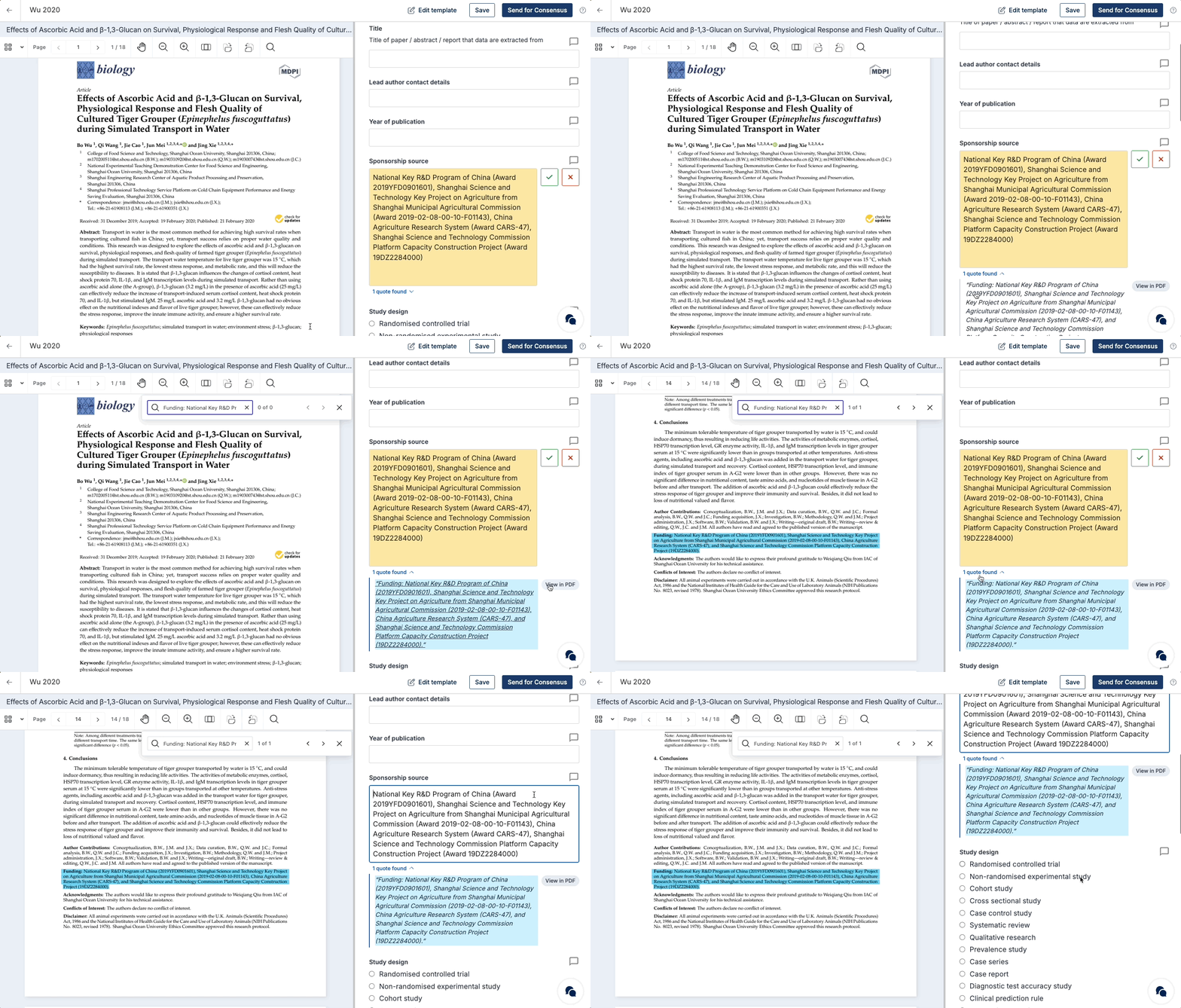
Above: Covidence’s side-by-side data extraction view allows reviewers to extract data while reading the full text.
Why structured data matters
For Karla, however, the biggest advantage wasn’t simply convenience. What mattered most was the structure the platform introduced to the extraction process. In systematic and scoping reviews, data is often messy and nuanced, and standardisation plays an important role in reducing inconsistencies across reviewers.
“I find this is more of a structured way of doing things. The data is always messy with systematic and scoping reviews, and at least this way there’s some structured ways that people can answer.”
That structure improved not only consistency but also the quality of the output. “I think it gives less chance of error because we’re forcing people to select things versus free text.” The result was cleaner data and a more reliable extraction process. “One thing I really like is that the data that comes out of Covidence is really clean.”
From screening to a trusted review platform
Over time, Karla’s trust in Covidence continued to grow. What began as a better solution for screening gradually expanded into other stages of her review workflow, including data extraction.
“I even use Covidence for duplicate removal now, which I never used to. I used to do that by hand before.”
That shift is perhaps the clearest sign of how her perspective has changed. Covidence is no longer simply a tool she uses for one part of the review process; it has become a platform she trusts across the entire workflow.
“From step A all the way to F, I find it really helpful.”
Today, Karla recommends Covidence confidently to other researchers, particularly those conducting systematic or scoping reviews with collaborative teams.
“If someone is doing a systematic or scoping review, I’d highly recommend Covidence. It’s easy to navigate, a great collaborative tool, and the data that comes out of it is really clean.”
For Karla, the biggest shift wasn’t simply moving data extraction from spreadsheets into a new platform. It was moving to a more structured, collaborative workflow with cleaner outputs and less room for error.
What began as a screening tool has become a platform Karla trusts across the entire review process – from step A to step F
Key takeaways
- Cleaner, more structured data
- Less manual cleanup
- Fewer inconsistencies across reviewers
- One connected workflow from screening to data extraction
- Trusted throughout the review process
About Dr. Karla Krewulak
Dr. Karla Krewulak is a Senior Research Associate at the University of Calgary with more than 25 years of research experience across biochemistry, health services research, and critical care. Her work focuses on improving care for critically ill patients and their families, with particular interests in ICU delirium, dementia, and family involvement in care. She regularly leads and supports systematic and scoping reviews as part of multidisciplinary research teams.