Joshua wasn’t working on his review full-time. By day, he was training as a Doctor of Medicine – attending to patients, conducting clinical assessments, and managing the demands of medical training. His research happened later, usually between 8pm and 10pm. And during those limited evening hours, he was working through a scoping review with nearly 500 included studies.
The challenge: making progress at scale
At first, Joshua approached data extraction the way many researchers do: manually. Copying. Pasting. Moving between studies and extraction notes. But with 496 studies to review, that approach quickly became difficult to sustain.
“Initially I was doing copy and copy and paste. But with four hundred and ninety-six articles was huge amount.”
Joshua needed a workflow that would help him stay organised, maintain momentum, and make steady progress, even in short working sessions. When he found Covidence, the difference was immediate.
“When I found Covidence, it was way easier”
With a structured workflow in place, the review felt far more manageable.
Easy to learn, easy to start
One of the biggest advantages for Joshua was how quickly he was able to get started. Compared with other approaches he had explored, Covidence felt easier to learn and more intuitive to use.
“I had looked at other approaches, but I found Covidence much easier to learn and start using immediately.”
That ease of onboarding mattered. When time is limited, getting started quickly makes a huge difference.
Working in focused sessions
Joshua wasn’t working in long uninterrupted blocks.m He was fitting extraction around a demanding schedule.
“I was only doing my extraction from eight PM to ten PM.”
That meant every session mattered. He needed to be able to pick up work quickly, make meaningful progress, and stop without losing momentum.
Picking up exactly where he left off
One feature Joshua valued most was the ability to save progress and continue later. Rather than restarting or trying to remember where he had left off, he could simply return and continue from the exact same point.
“After I extracted a certain number of articles and left it until the next day, I didn’t have to come and start from the beginning. I was able to continue from where I left off. That feature was fabulous.”
This flexibility made a major difference. It allowed Joshua to steadily work through data extraction with limited time on a high-volume review while balancing the realities of clinical training.
“As a full-time medical student, I could fit data extraction around my clinical schedule and steadily make progress on the review.”
Staying focused during extraction
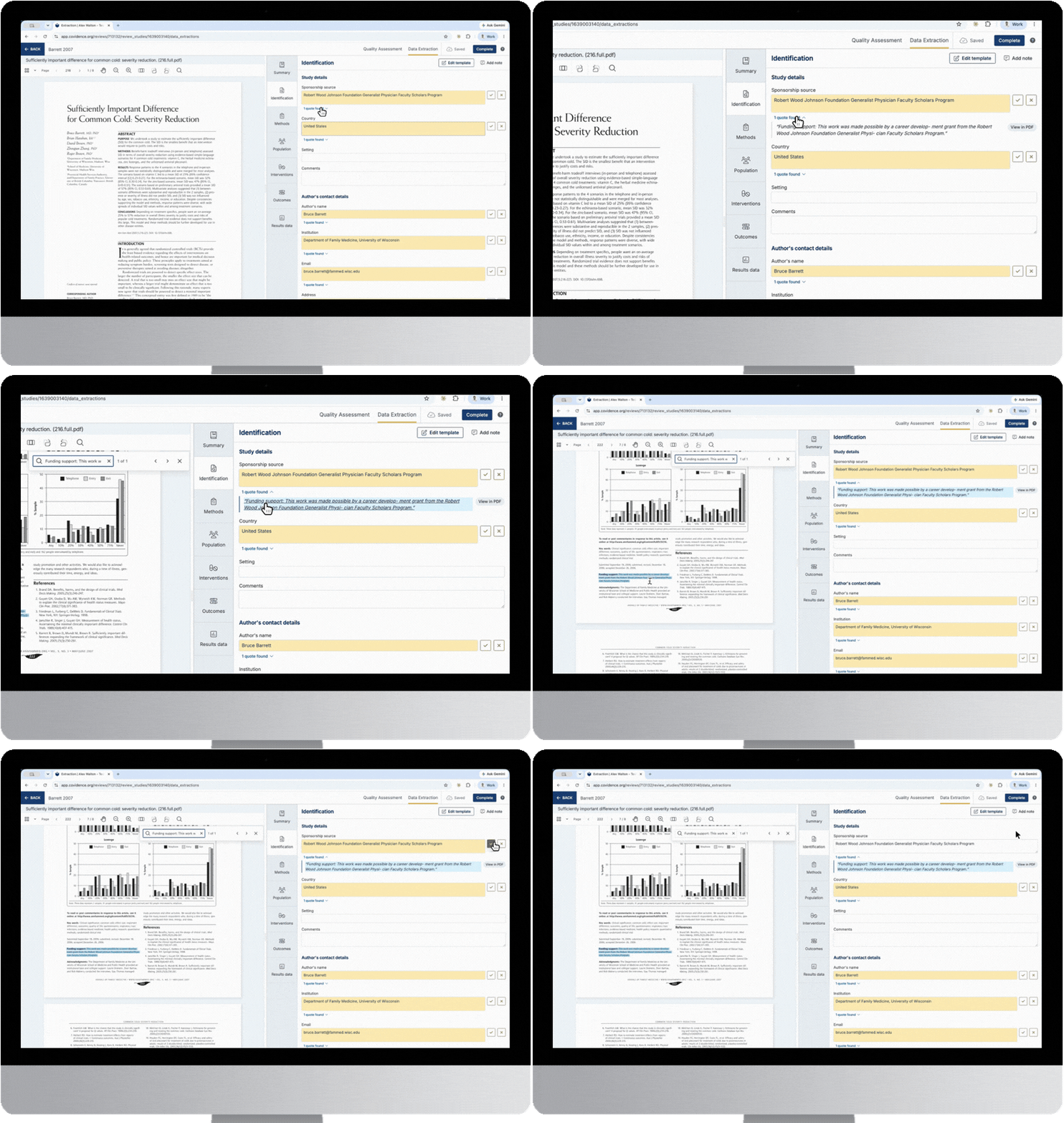
Joshua also highlighted the side-by-side review experience as a major benefit. Being able to read the full study while extracting information in the same workspace made the process easier and more efficient.
“The feature is brilliant because I can see the full article and review it while I have another partition showing where I can collect information.”
Keeping the study and extraction workspace together reduced friction and helped him stay focused.
Would Joshua recommend Covidence?
When asked whether he would recommend Covidence to other researchers, Joshua’s answer was immediate.
“Without hesitation, yes, I would recommend Covidence.”
For Joshua, Covidence helped turn a demanding review into something manageable. It made data extraction easier to learn, easier to organise, and easier to fit around a busy schedule.
Joshua’s experience reflects a reality many researchers know well: data extraction is not just about completing a review – it’s about finding a workflow that helps you keep moving forward – even when time is limited.
About Joshua
Joshua Mbise, MD, is a student Doctor of Medicine based in Tanzania. His work involves attending to patients, conducting clinical assessments, and formulating diagnoses across a range of healthcare settings.
Alongside his clinical training and practice, Joshua has developed experience in health research, evidence synthesis, data analysis, and statistical methods. As an early-career researcher, he has contributed to evidence review projects while balancing the demands of full-time medical training and clinical rotations.
Joshua is particularly interested in applying research and evidence-based approaches to improve healthcare decision-making and patient outcomes.
For his recent scoping review, Joshua used Covidence Data Extraction 2 to manage study extraction.
Ready to simplify your data extraction workflow?
Try Data Extraction in Covidence for yourself here.